
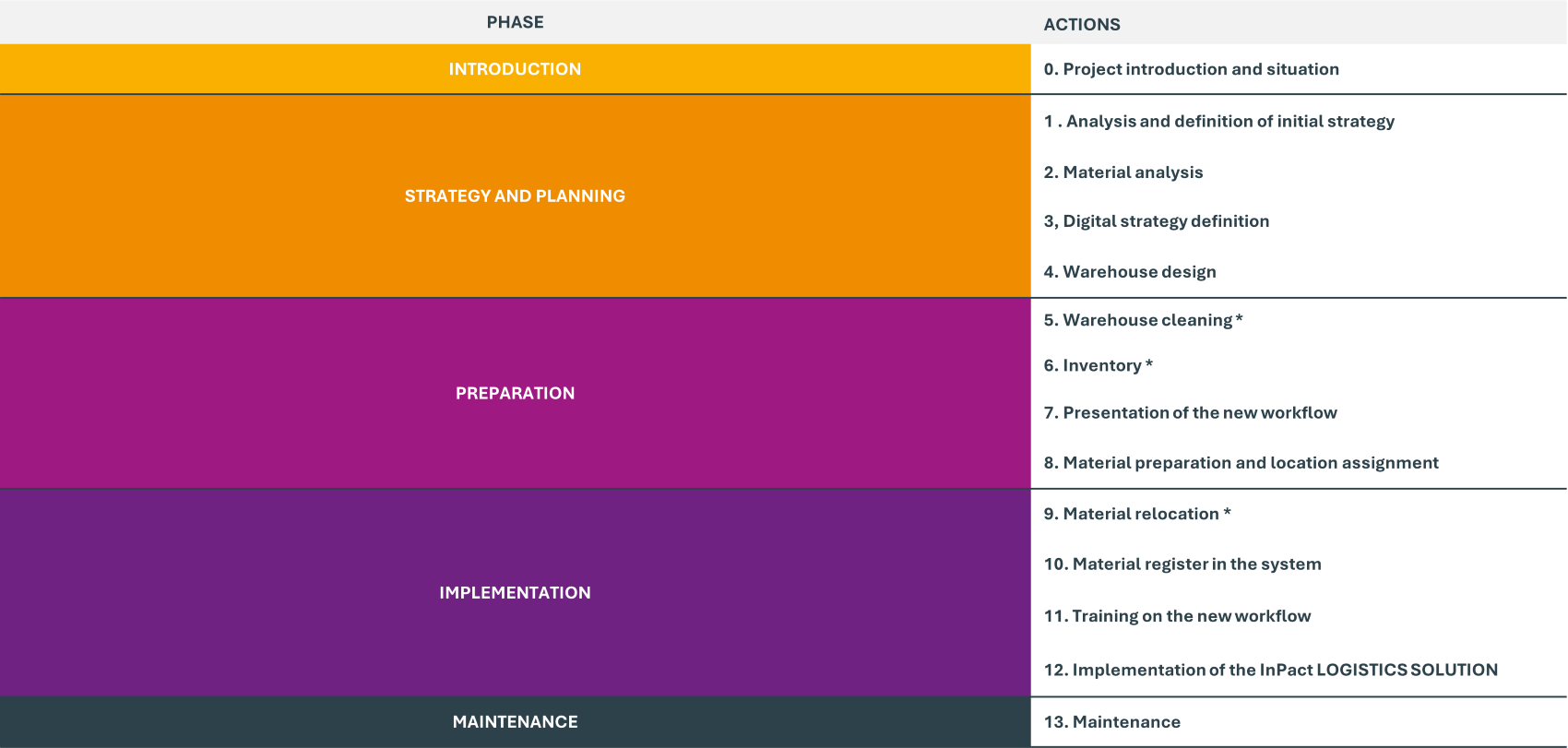
* Actions not included if the warehouse does not have previous material.
STEP 1 - AS-IS ANALYSIS
Understanding and analysing a project’s supply chain is essential to the long-term success of a KAEFER business unit. It is also the key starting point for defining any logistics strategy. It allows us to adapt to any business environment and to reduce the unforeseen challenges that arise in the day-to-day work on site. Ultimately, well-managed logistics processes make all the difference in such a competitive world.
For all these reasons, it is essential to understand the current situation before embarking on defining the logistics strategy, planning the warehouse or trying to adapt the logistics applications for the project. To achieve this, we provide a series of questions to reflect on before starting any definition. With this knowledge, we can then outline the subsequent stages for implementing logistics solutions.
CURRENT…
How much storage space is available?
What is the material consumption process?
Who is in charge of materials management?
How are warehouse and logistics staff trained?
STEP 2 - DEFINING OBJETIVES
Once we understand the current state of the project and the resources available, we move on to the second step of our roadmap. We discuss what we need.
At this point, specific objectives are defined based on the identified needs. Two basic aspects are addressed: processes and resources.
What material do we want to control?
When will the pilot test take place?
What indicators do we define?
Who will be the logistics role?