
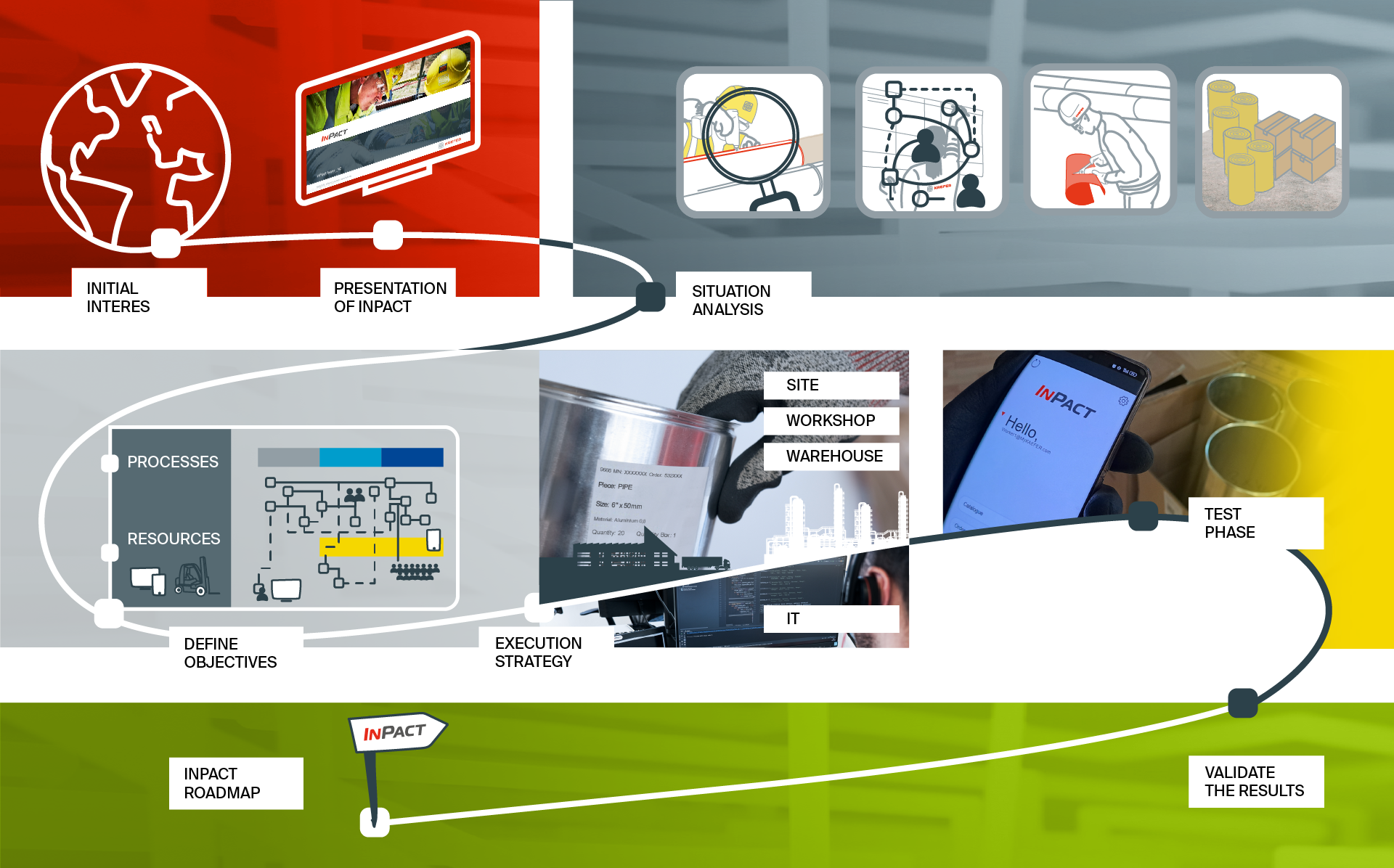
Overview of our global business unit roadmap.
This Global Business Unit Roadmap provides a solid framework for the implementation and customisation process of InPact solutions for each business unit, from needs assessment to solution implementation and testing.
Each stage is critical to ensure the success of the project and effective alignment with country or project needs and objectives.
With these goals in mind, it is essential to maintain constant communication with key stakeholders and optimise our resources to the fullest.
STEP 0
0.1 INITIAL INTEREST
In this stage, the country expresses its interest in learning about the solutions offered by InPact. This interest may arise from specific challenges or needs that the country wishes to address through innovation. After receiving this initial contact from the business units, we prepare a first meeting.
0.2 Presentation of InPact’s solutions and examples
In these initial meetings, we present the solutions offered by InPact in different business areas, with particular emphasis on the problems we address, and we begin to understand our interlocutor’s needs.
STEP 1
1. Situation analysis
This stage involves several key actions, such as online meetings with different stakeholders to understand their specific needs and challenges, as well as mutual awareness of existing constraints.
STEP 2
2. DEFINING THE OBJETIVES
At this point, specific objectives are defined based on the identified needs. Two fundamental aspects are addressed: processes and resources.
Processes: A detailed schedule is created that outlines the necessary actions to implement the solutions and achieve the objectives. This provides a clear roadmap for the project’s development.
Resources: The resources required to complete the project are identified, including the work team, materials, and any digital solutions that need to be adapted or implemented.
STEP 3
3. Execution strategy
As a result of the previous stage, the execution of the project is planned, taking into account the following key points:
> Implementation of the initial action plan in the following areas: workshop, construction, logistics and IT. These actions will be tailored to the needs identified and will not be standardised.
> Migration of digital solutions to each country’s environment. This may involve adapting the solutions to the language, digital environment and modules required.
STEP 4
4. Pilots
Before full implementation, a testing phase is carried out to ensure that the solutions work effectively and meet the defined requirements. At this point, it is crucial to define a set of indicators that will allow us to validate the results and assess the scope for final implementation in the projects.
STEP 5
5. Validate the results
Once the solutions have been implemented in the site / workshop, it is essential to analyse any problems that may have arisen during the project, compare the indicators defined in point 2 and assess improvements for future projects.
STEP 6
6. InPact’s project implementation
Finally, we can refer to the project roadmap to understand how the methodology will be executed once the different solutions are implemented. This will allow us to define the resources and processes required to scale the implementation of InPact to other projects within the business unit.
This will allow us to define the resources and processes required to scale the implementation of InPact to other projects within the business unit.
Discover how to implement 